
Roundtable Events
ARCS hosts regular curated events, from public webinars to members-only roundtables under the Chatham House rule. We use Zoom for our virtual gatherings.

-

Working with Artists and Creatives to Expand Resources
Public Event
April 21, 2026, 10:00 am ET / 11:00 am Buenos Aires / 2:00 pm Dakar
How can human rights and social justice NGOs collaborate with creatives and artists to broaden their resource base, reach new supporters and rethink what “resourcing” really means?
This session will feature Artist Tomás Saraceno, who has been called "The artist ‘most likely to change the world’" (The Guardian), who will share his experience working with El Santuario del Agua (The Sanctuary of Water) in Argentina. It will also feature Coumba Toure, an artist and storyteller, and the founder of Kuumbati and Invisible Giants.
Moderated by Gastón Chillier, ARCS Roundtable Advisory Committee member. -
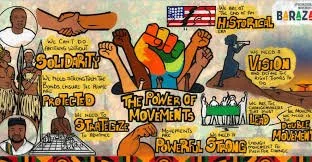
African Philanthropy Traditions and their Comparative Relevance
Public event
May 2026 (date/time TBD)
This event will explore constituency-based giving models and alternative resourcing strategies emerging from social movements across Africa. Drawing on deep-rooted local traditions of collective giving—such as rotating savings groups, community tithing practices, and movement-led fundraising—the session will examine how these models are being adapted and formalized to sustain civil society organizations beyond donor dependency. We will discuss what makes these approaches culturally resonant and financially viable, and consider what lessons they may hold for organizations operating in other contexts seeking to diversify their resource base and strengthen community ownership of their work.
-
What Can We Learn from Independent Media?
Members-Only
June 2026 (date/time TBD)
This ARCS Roundtable will explore what advocacy NGOs can learn from the dramatic transformation of independent media over the past decade. The journalism industry faced a crisis of resourcing as a result of digitalization of media and outmoded past business models. Although some companies went out of business, others were able to adapt to changing structures. Faced with collapsing advertising revenues and the disruption of traditional distribution models, journalism organizations were forced to fundamentally reimagine how they resource their work—pioneering subscription models, membership communities, philanthropic-editorial hybrids, and reader-funded investigative units. We will examine how this paradigm shift in media offers a compelling analogue for civil society organizations grappling with their own funding pressures: over-reliance on grant cycles, donor concentration risk, and the limitations of project-based financing. The conversation will also surface the tensions and trade-offs involved, including how to preserve organizational independence and mission integrity while building innovative resourcing models.